
HEUREKA
Archimedes' metric insight, relived with Dimensional AI.
Metric projects and instruments => evolving engines of insight and implementation.
HEUREKA's colour language
Each project family has one colour. Each journey carries the colour of the family it leads into. Wherever you see that colour later, you know which journey and which family a page belongs to.
- Dimensional AIArtificial Dimensional Intelligence (ADI)Journey: Address the AI Credibility Challenge
- ComparabilityLumos • Chronos • Chroma (Light, Time, Colour) (LCC)Framework every journey draws on
- Optical measurementDigital Colour Optics (DCO)Journey: Solve a Measurement Problem
- Instruments & evidenceDimensional Image Intelligence (DII)Dimensional Data Intelligence (DDI)Dimensional Time Intelligence (DTI)Dimensional & Metric Intelligence (DMI)Journey: Explore ADI Capabilities
Metric projects
A metric project investigates what can be measured and compared — and which methods turn that into useful insight. HEUREKA brings multiple projects together because images, physical phenomena, data and changes over time call for different questions and approaches.
Instruments, engines and implementations
An instrument puts a method to work: describing observations, revealing differences or enabling comparisons. As methods are tested and refined, they can evolve into reusable engines and practical implementations. HEUREKA is home to this work — from open questions to implementation.
A family of projects
More about HEUREKA
Three Challenge Domains, One Common Root
HEUREKA starts with the problems — not the technology. Each domain is measured with its own family of metric rods, and all of them share one root: the credibility of measurement itself.
Misinformation
How content loses meaning under pressure — and how to measure it.
Open the challenge →Data Centres & Energy
The operational truth of modern compute infrastructure.
Open the challenge →Climate Change
Time series that must stay consistent over decades.
Open the challenge →The common root
AI Credibility
Every claim above is only as strong as the measurements behind it. Dimensional AI makes those measurements explainable, traceable and reproducible.
Open the root of the challenges →A space for thinking in dimensional metrics.
- dimensions in geometry, physics, informatics
- dimensional ladders
- pixel-by-pixel spiralling
- time as dimensional movement
- light as colour and temperature
- light as daily and seasonal cycles
- colour as calmness and motion
- curvature as circular and elliptic fragments
- metric motion circles
- Dimensional & Metric Dictionary (DMD)
- vocabulary of metric intelligence
- TERM → CONCEPT → DOMAIN
The Salon is where ideas breathe, diagrams speak, and metric insights become visible.
A demonstration space for metric instruments.
- DCO — Digital Colour Optics ↗
- DCM — Digital Colour Metrics
- reference images
- optical calibrations
- ADI — Artificial Dimensional Intelligence
- LCC — Lumos · Chronos · Chroma
- DCE — Data Centre & Energy engines
The Showroom displays working instruments and engines — not theoretical concepts — that put metric intelligence into practice: from optics to materials, biology, medicine, and energy.
The factory floor of metric intelligence — dimensional science and metric engines for human-visible and machine-interpretable metrics.
- DII — Dimensional Image Intelligence
- DDI — Dimensional Data Intelligence
- DTI — Dimensional Time Intelligence
- RVM — Radial Volumetrics
- SCB — Scale Band Engine
- LAC — Light-As-Colours
- DCO — Digital Colour Optics
- DCM — Digital Colour Metrics
- Dimensional Curvature Operators
- Volumetric Curvature Engine
- Dimensional Alternation Engine
- temporal stability
- pace of change
- linear speed
- frequential cyclicity
- volumetric spiralling
- Short / Medium / Long trend periods
- Power-As-Forces (PAF)
- Ratios-As-Chemistry (RAC)
- Metric Motion Circles (MMC)
- DCE — twelve engines, nine parameters
- Roughness Motormeasures surface structure and roughness — not the measuring device
- Retina Motormeasures retinal vessel curvature and structural brightness — not the camera
- Optical Quality Motormeasures sharpness, distortion and transmission — not the test rig
- Sensor Motormeasures the sensor's own response, drift and noise — not the acquisition chain
- Coating Motormeasures coating thickness and adhesion — not the imaging method
- Material Motormeasures the workpiece's material properties — not the sensor
A real-world motor is defined by what it measures — not by the device used to acquire the observation.
The Machine Hall is where metric engines become software machines — and machines become motors for real-world use.
HEUREKA hosts metric projects and instruments:
- Artificial Dimensional Intelligence
- Factory of Machines, Engines, Motors
- Lumo · Chrono · Chroma
- New measuring methods for Light, Time, Colour
- Digital Colour Optics
- Software lenses for real lens production
- Dimensional Image Intelligence
- Transforming image series for comparable metrics
- Dimensional Data Intelligence
- Making structured data visible and comparable
- Dimensional Time Intelligence
- Making temporal behaviour visible and comparable
- Archimedes' metric insight for humans and AI agents
- A host of engines as scientific instruments and APIs
Each project contributes a different lens, engine, or instrument to the metric renaissance.
To make metric insights accessible, explainable, and beneficial. For optics, materials, biology, medicine, energy, and public understanding.
HEUREKA.digital is where physics and geometry meet modern AI, and where Archimedes' insight is relived for a better world.
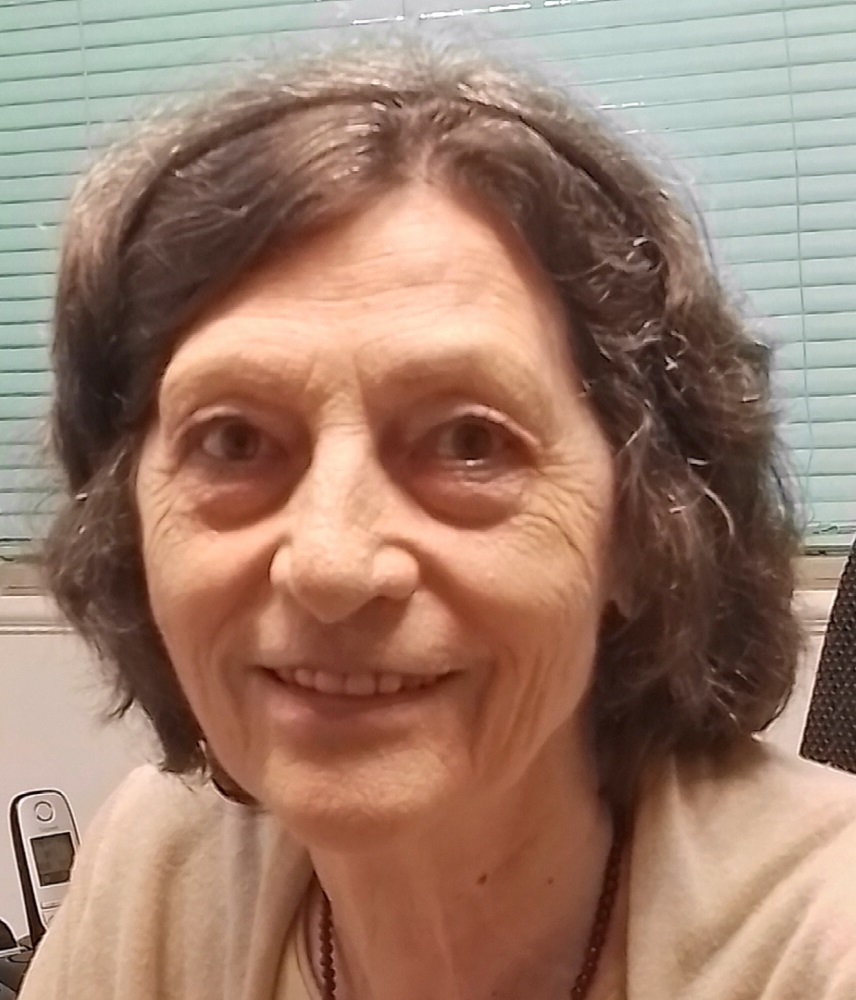
HEUREKA is the result of more than three decades of independent research, software-supported exploration, and dimensional thinking by Sabine Kurjo McNeill.
The project brings together work on measurement, comparison, classification, language, colour, dimensionality, and evidence-based decision-making.
What began as a search for better ways of understanding complex relationships has evolved into a growing ecosystem of dimensional methods, instruments, and technologies designed to transform observations into evidence and evidence into decisions.
Since 2025, Sabine Kurjo McNeill has also been contributing to public AI education through courses and discussion formats in Rathenow and Berlin.
HEUREKA became feasible when the path from idea to working prototype shrank from months to hours. Ideas could be challenged, reformulated, implemented and tested before the next one arrived. As the time lapse between thinking, discussion, implementation and evaluation nearly disappeared, the cost of being wrong fell dramatically. This made it possible to explore, compare and refine many more concepts than would have been practical in a conventional development process, helping HEUREKA evolve into a growing family of demonstrations, methods and architectures.
“The distance between thinking and building had collapsed.”
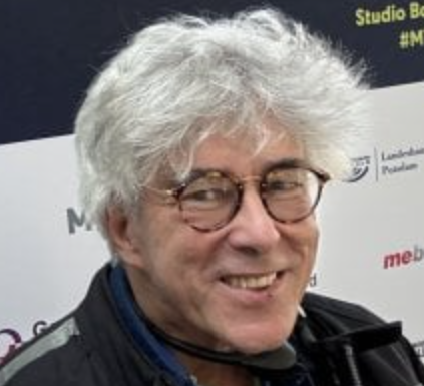
Since July 2023, HEUREKA has been accompanied by strategic advisor Dr. Wolf Siegert.
As founder and publisher of daybyday.press, he has spent more than two decades documenting digital transformation, media, technology, and innovation.
HEUREKA explores how explainable, traceable, and reproducible measurements can support better decisions in an increasingly complex world.
The work currently focuses on three challenge domains:
- Misinformation
- Data Centres & Energy
- Climate Change
These domains share a common root: AI Credibility
Every claim is only as strong as the measurements behind it.
HEUREKA investigates how Dimensional Intelligence can help create evidence that is explainable, traceable, and reproducible, enabling both people and AI systems to organise, compare, and reason about evidence, understanding not only what a system reports, but also why it reports it.