Investigation 2 of 2 · Optics · retinal photography · Ophthalmic optics partner
Retina series GRAPE 100
What was measured across five visits in both eyes, and how reliable are the conclusions?
- Method
- DII · Powered by ADI
- Status
- Observation of one person · no diagnosis
Choose “Save as PDF” in the print window.
- Dataset / Object
- Images / Measurement basis
- Measurement
- Zusammenhang
- Interpretation
- Limits
Dataset / ObjectWhat is being examined
- Source
- Huang X. et al. GRAPE: A multi-modal dataset of longitudinal follow-up visual field and fundus images for glaucoma management. Scientific Data 10, 520 (2023). · Article ↗ · Dataset ↗
- Licence
- CC0 1.0
- Person
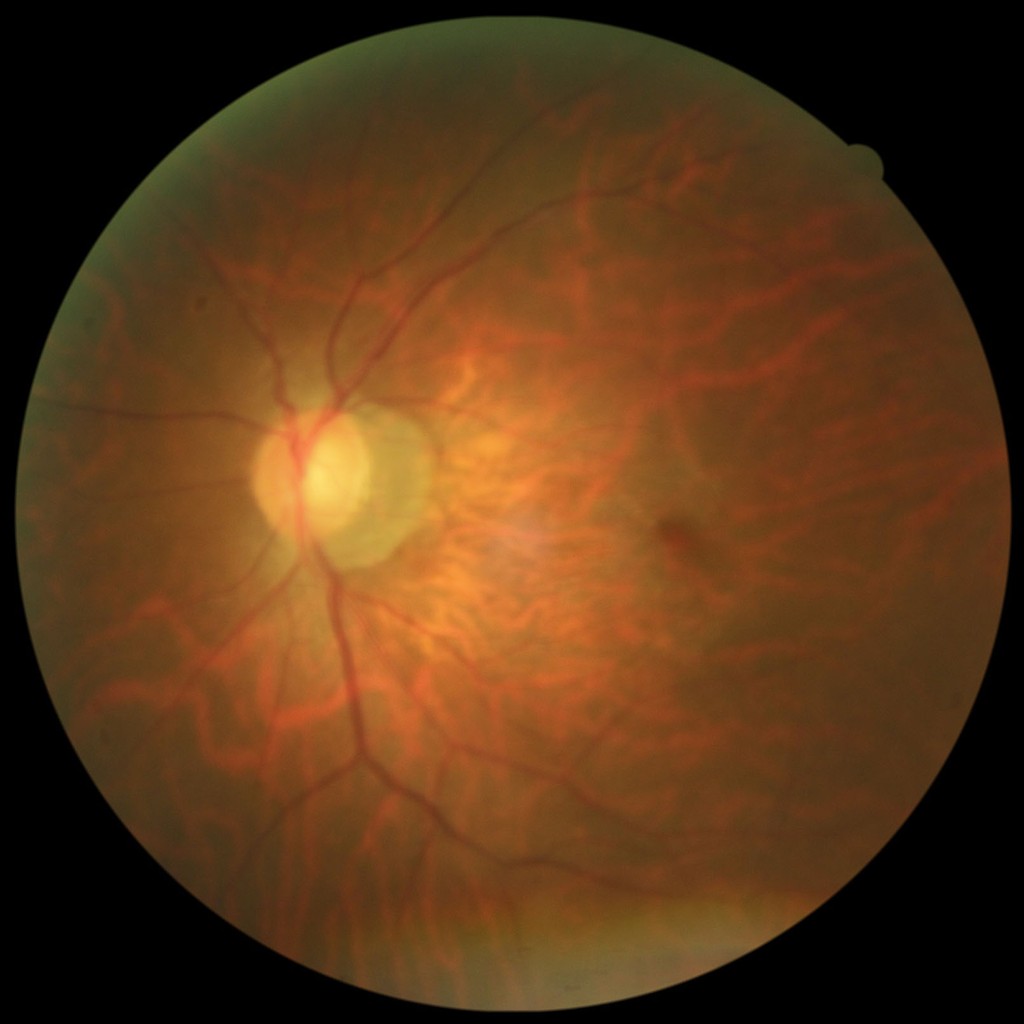
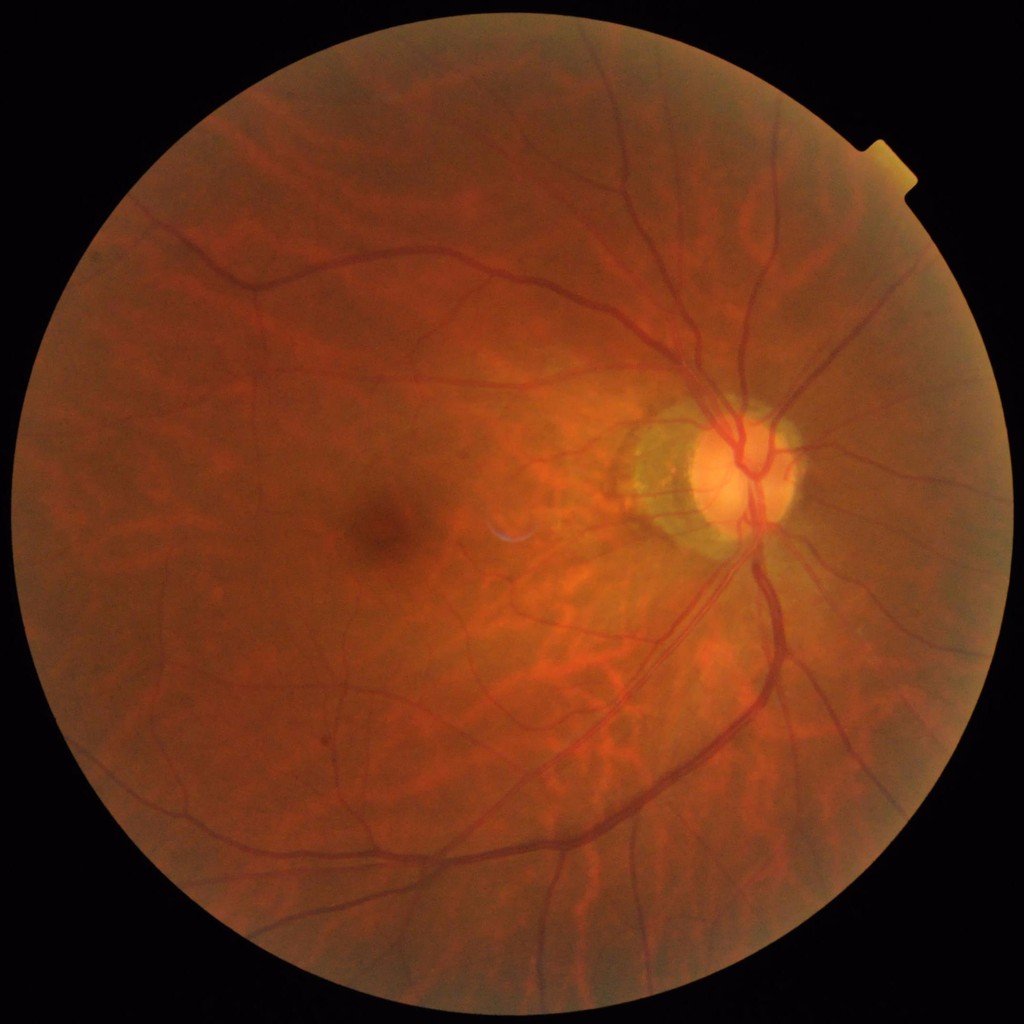
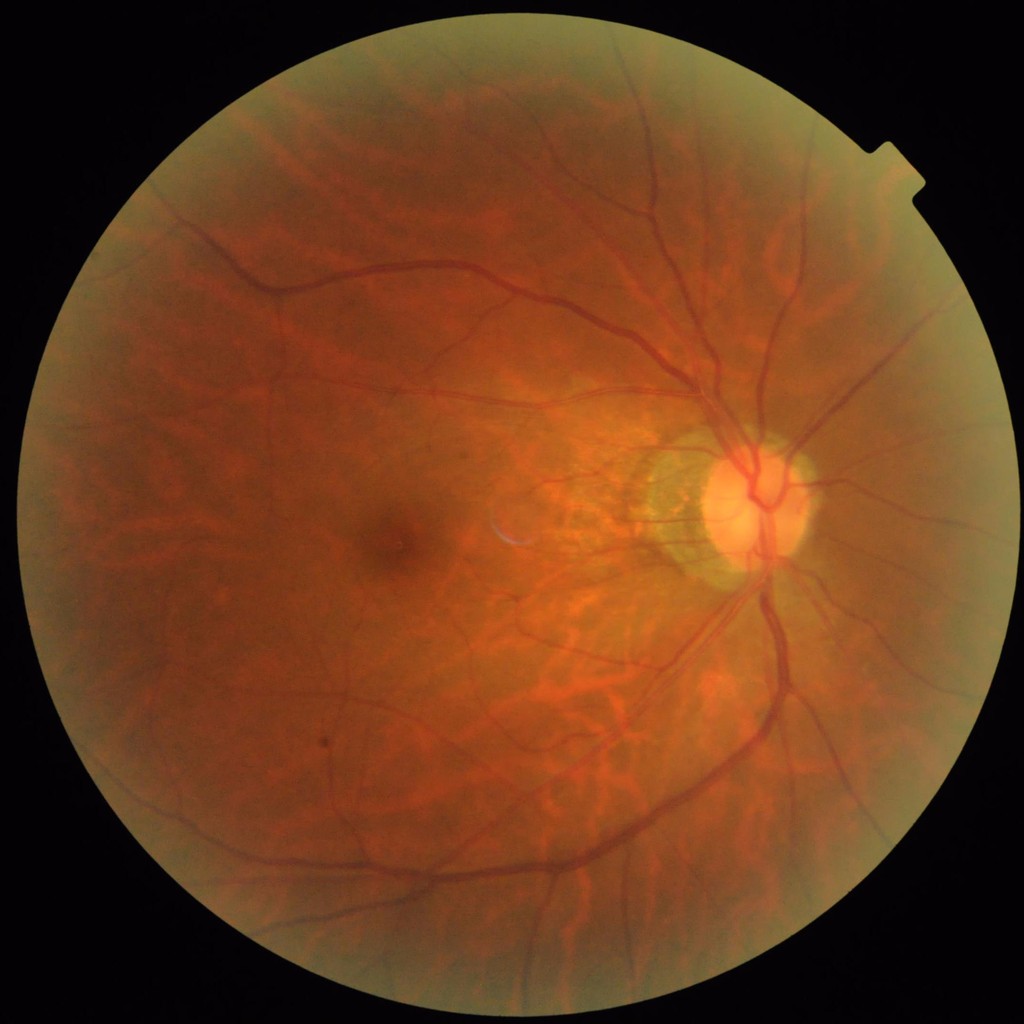
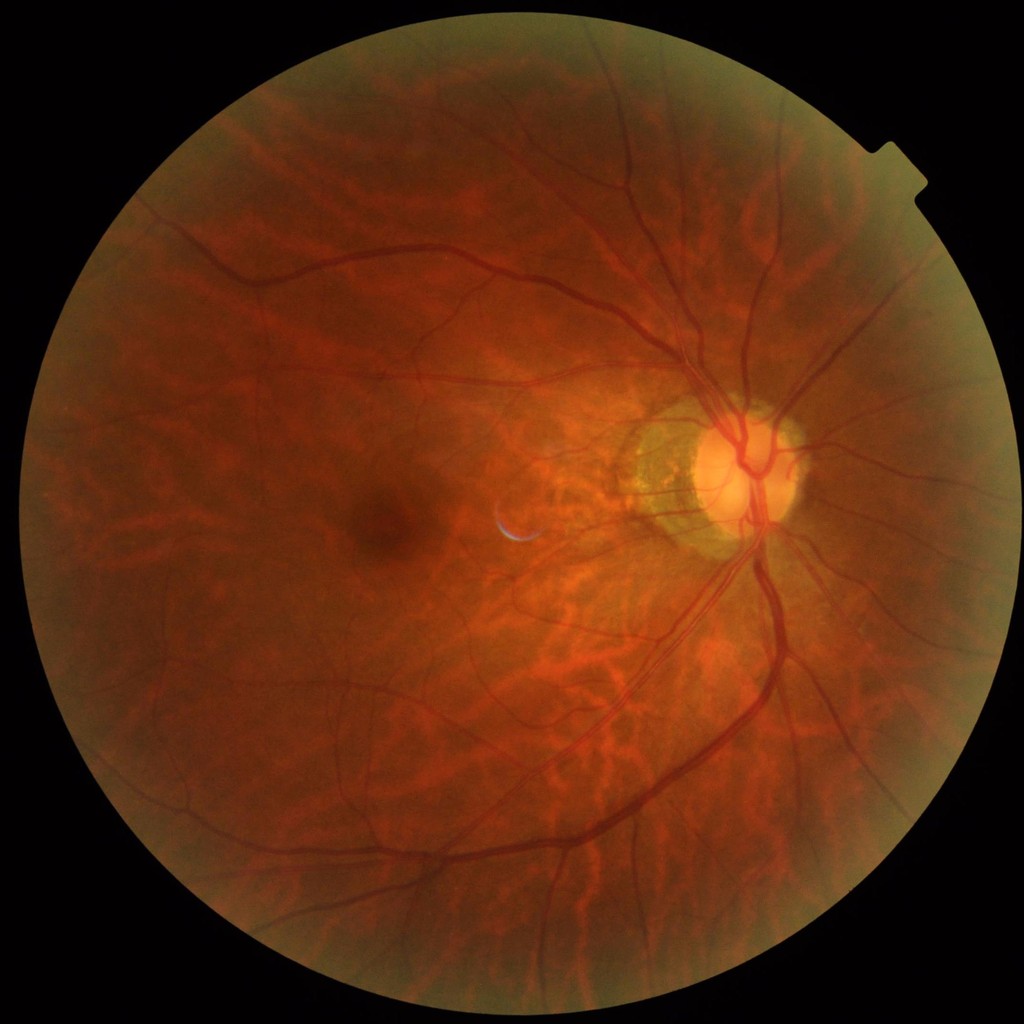
- Person 100, both eyes, five visits each over 2.04 years
- Cameras
- Camera A: Canon CR-2 PLUS AF (2136 × 2136 px) · visits 1–4
Camera B: Canon CR-2 AF (1611 × 1611 px) · visit 5 - Labels in the dataset
- Left eye: flagged as progressing in the dataset · Right eye: not flagged as progressing in the dataset
The progression labels come from the dataset. They are context, not confirmation of the values on this page.
Images / Measurement basisWhich images were used?
Ten retinal photographs: both eyes, five visits each. All photographs are prepared identically (1024 × 1024 pixels) and measured on the centre square of 512 × 512 pixels. Each image opens in the original with one click.
Left eye
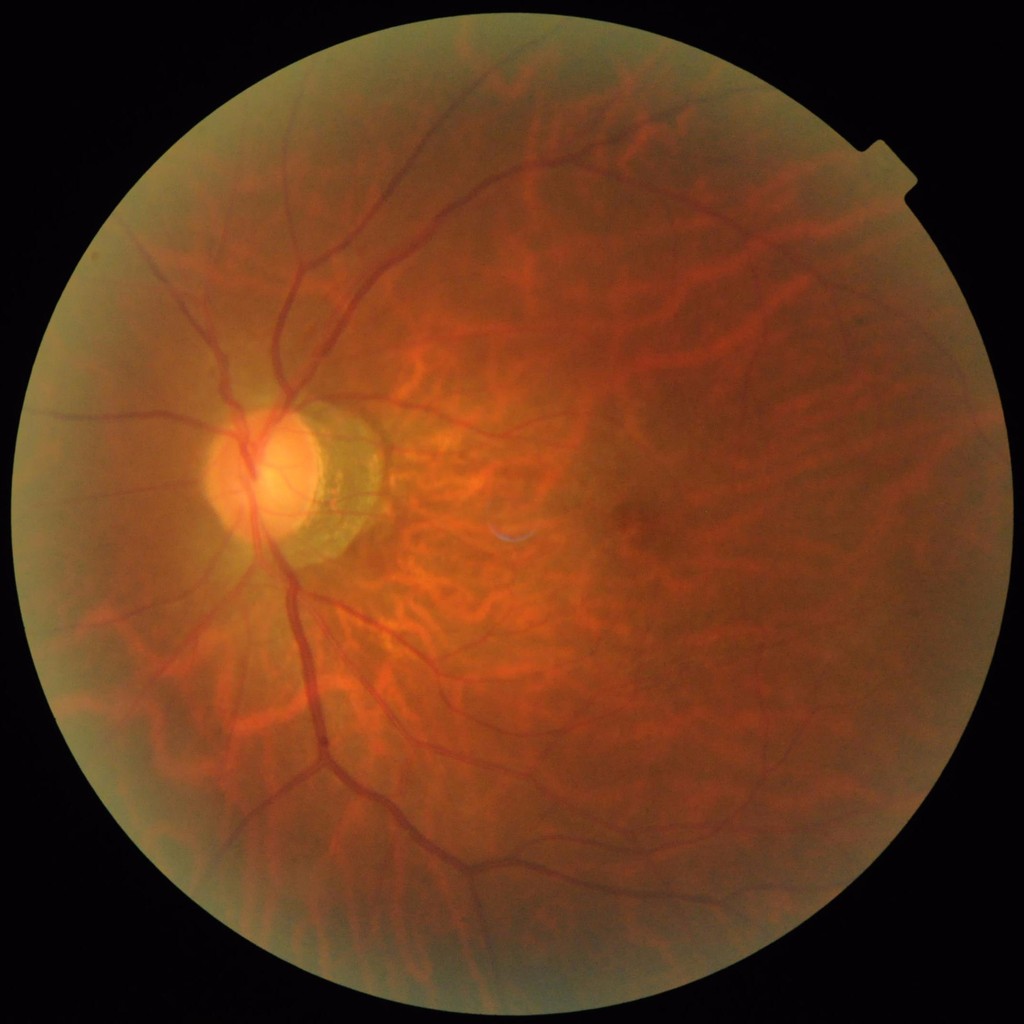 Original ↗
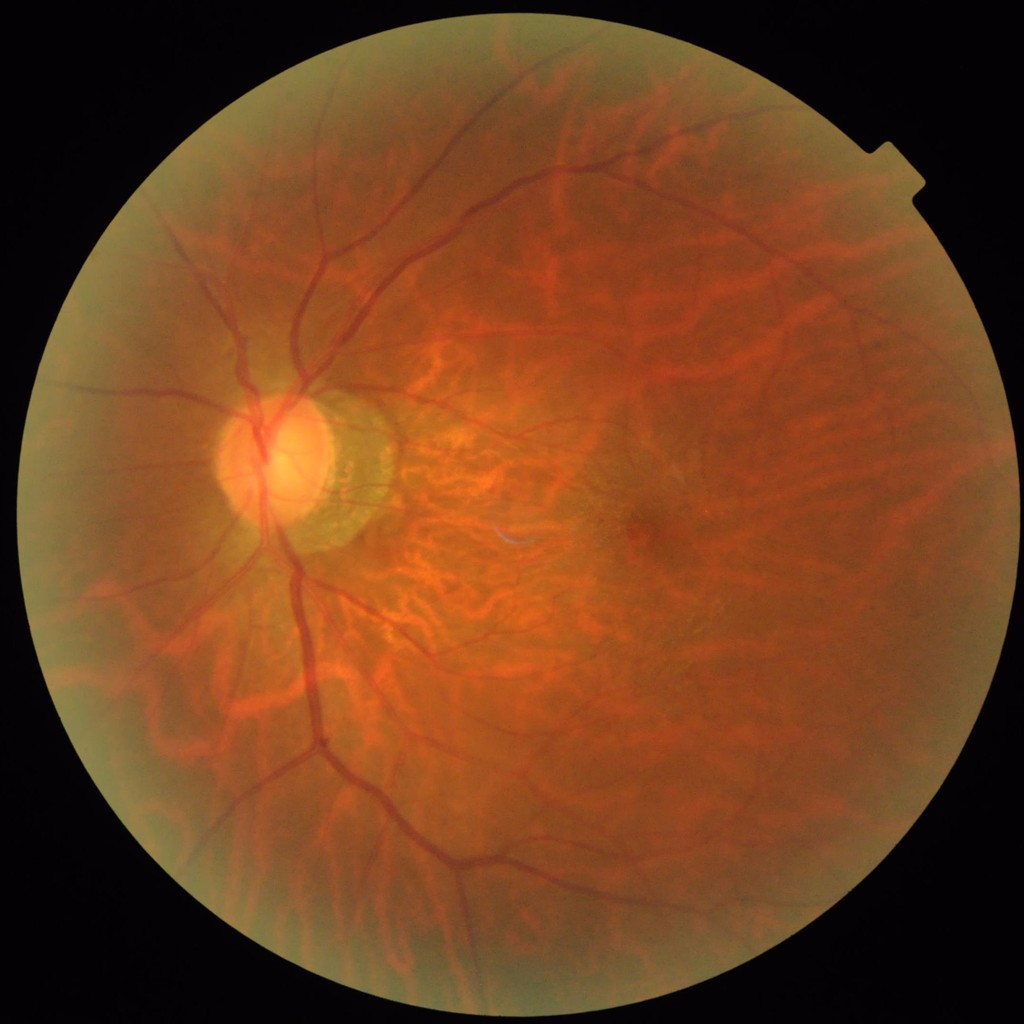 Original ↗
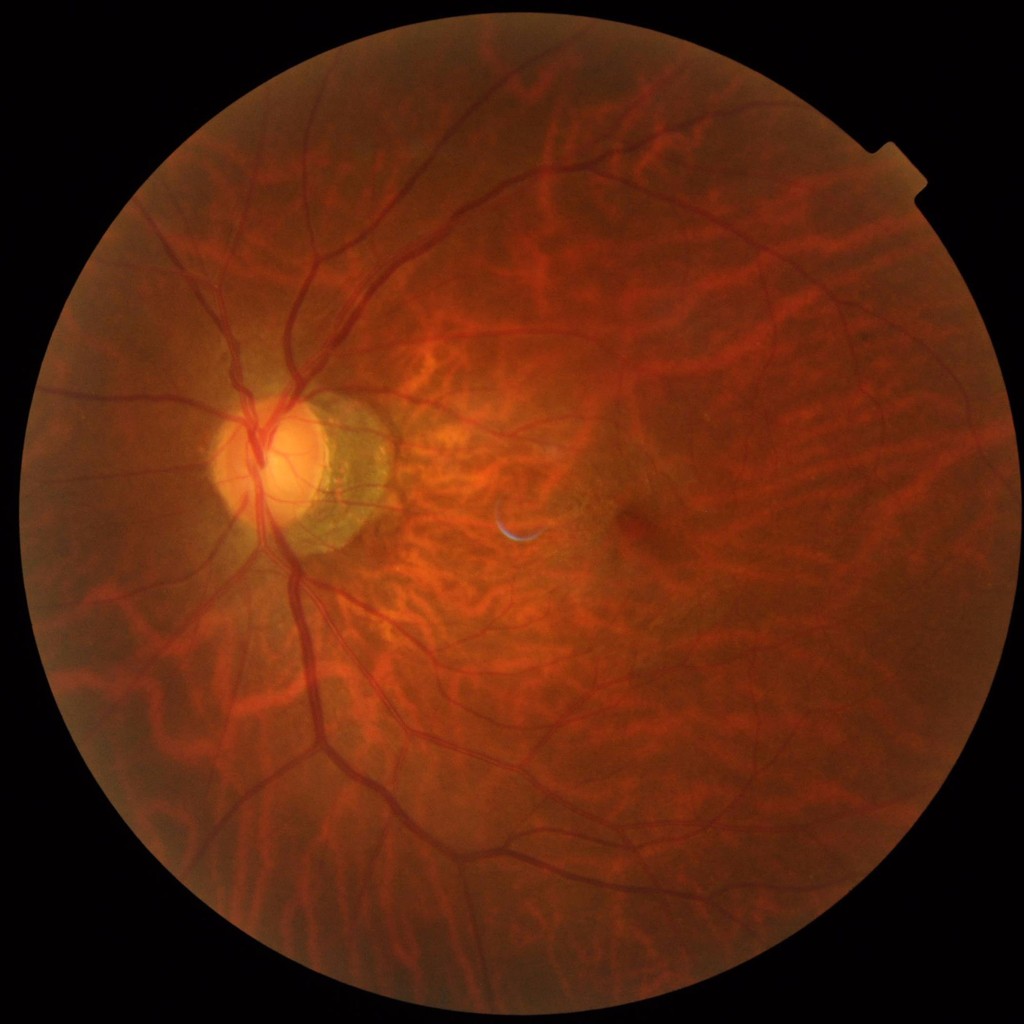 Original ↗
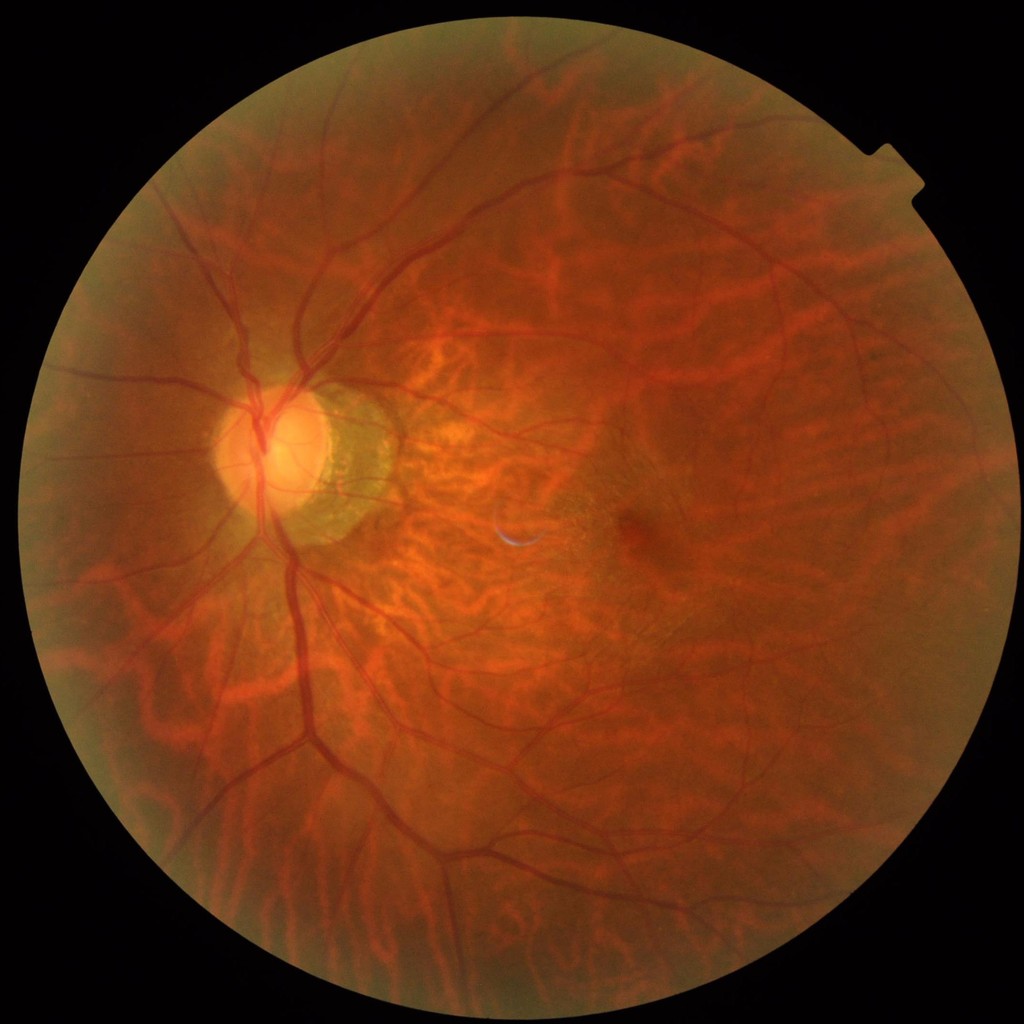 Original ↗
 Original ↗
Right eye
 Original ↗
 Original ↗
 Original ↗
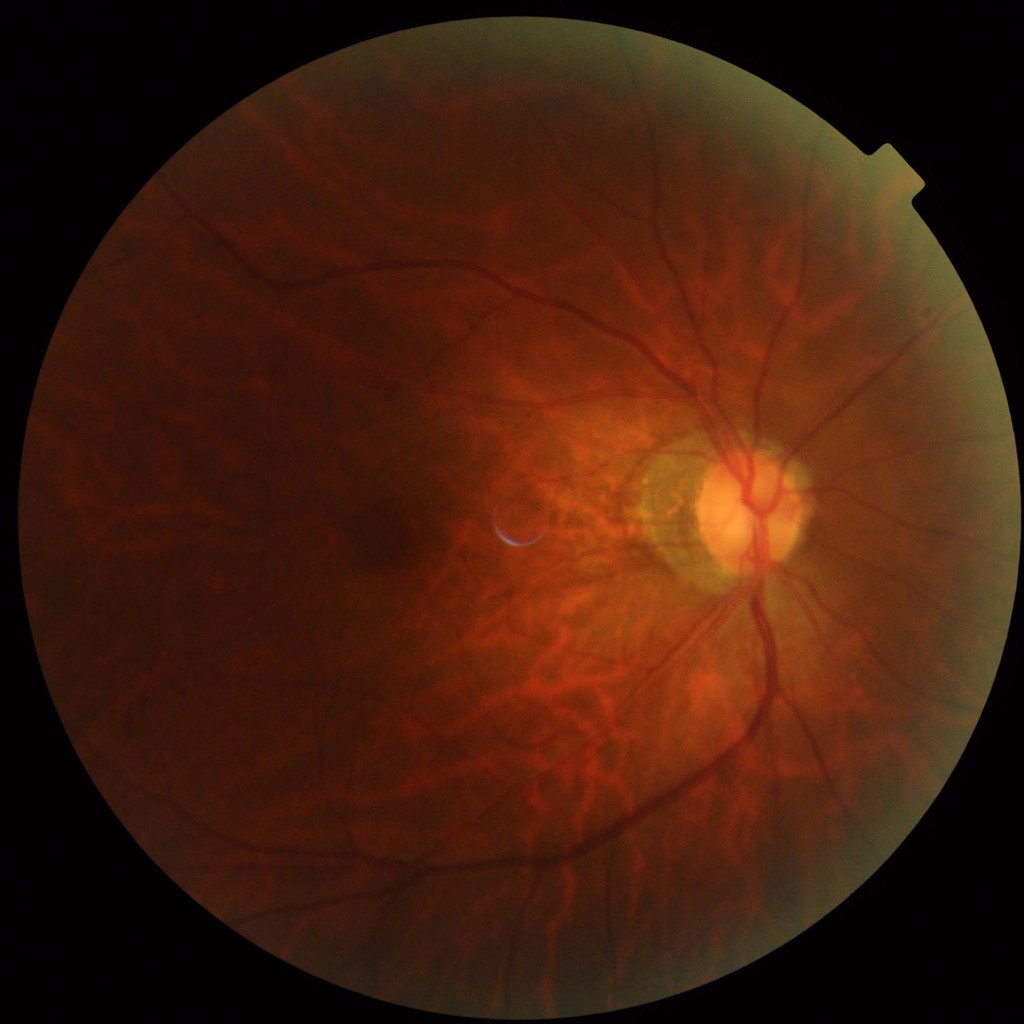 Original ↗
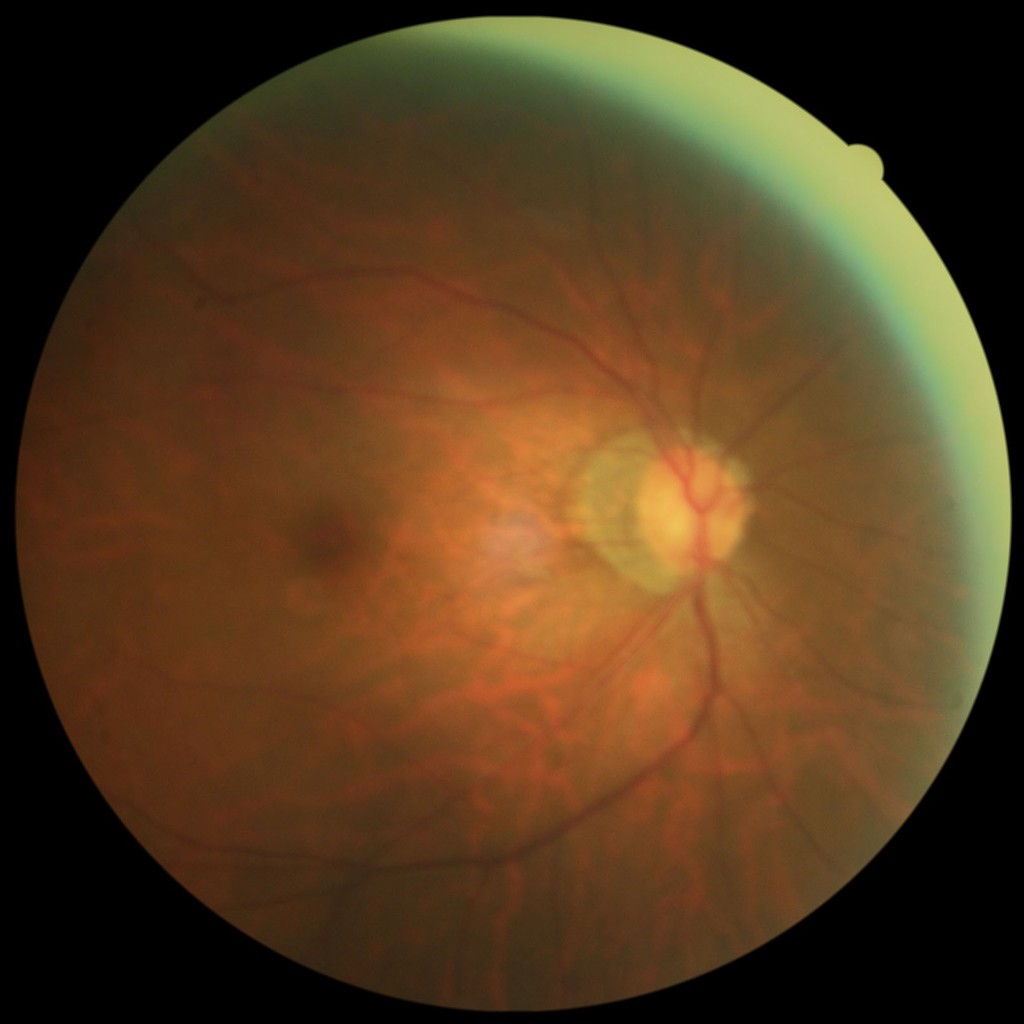 Original ↗
MeasurementWhich features were computed?
- Structure strength
- Mean strength of the calculated structure field.
- Hidden structure
- Share of strong structure with hardly any contrast in the brightness image.
- Pattern regularity
- How evenly the structure is distributed across eight rings from the image centre outwards; 100 % = all rings equally strong.
- Deviation from visit 1
- Image area whose structure departs from visit 1's direction pattern by more than mean + 3 standard deviations – a demonstration rule, not a validated tolerance.
| Visit 1 · A | Visit 2 · A | Visit 3 · A | Visit 4 · A | Visit 5 · B | |
|---|---|---|---|---|---|
| Left eye | |||||
| Structure strength | … | … | … | … | … |
| Hidden structure | … | … | … | … | … |
| Pattern regularity | … | … | … | … | … |
| Deviation from visit 1 | … | … | … | … | … |
| Right eye | |||||
| Structure strength | … | … | … | … | … |
| Hidden structure | … | … | … | … | … |
| Pattern regularity | … | … | … | … | … |
| Deviation from visit 1 | … | … | … | … | … |
ZusammenhangHow do the values hang together?
The series over time
| Interval | 1 → 2 | 2 → 3 | 3 → 4 | 4 → 5 |
|---|---|---|---|---|
| Gap | 5.5 mo | 6.8 mo | 5.4 mo | 6.7 mo |
| Camera | A → A | A → A | A → A | A → B |
| Left eye | … | … | … | … |
| Right eye | … | … | … | … |
Change in pattern regularity from the previous visit, in percentage points.
Observed Zusammenhänge
- At the camera change (visit 4 → 5) pattern regularity changes by … points in the left eye and … in the right.
- …
- …
- Without a camera change, too, both eyes move together at visit 3 (… and …). What affects both eyes equally in one session can also come from that session's light, focus and alignment.
InterpretationWhich statements are reliable?
Reliable: the jump at visit 5 affects both eyes at once and coincides with the documented camera change. An evaluation of one eye alone could not distinguish it from a change in the eye.
- The measurement supports this: in the last two visits both eyes change in the same session and in the same direction. An explanation that looks at the eye alone leaves that agreement unexplained.
- The measurement does not support: the claim that the eye changed. That would need photographs with an unchanged camera over the same period.
- The measurement is repeatable: the same files give the same values every time.
LimitsWhere are the limits of the evaluation?
- No diagnosis and no medical interpretation. Whether an eye changes is judged by doctors.
- One person, two eyes, five visits: this is a case observation, not a study.
- The camera change falls on the last visit. Camera and elapsed time cannot be measured separately in that interval.
- The metrics describe image structure on the centre square, not anatomical layers. They do not replace OCT or visual-field measurement.
- The published image files are measured. How the cameras processed the images internally is not known.
Next steps
- Same-day photographs of the same eye with both cameras, to measure the camera effect alone.
- More persons from GRAPE with and without a camera change, to check whether the shared jump recurs.
- A test target (model eye) at every session, to record light and focus per session.
Open the receipt: values, computation and repetition
- Pattern regularity
- Left eye: …
- Right eye: …
- Instrument
- DII · Powered by ADI
- Computed
- …
- Repeat it yourself
- Series in DII in OperationThe story behind it
Investigations
Cases with specialist partners
Real components and captures, examined together with practitioners.
- Investigation 1 · Manufacturing · turned partComponent Ring 5855What do the image features distinguish reliably – and what can they not yet separate on this ring?6 workshop images from 2 photographsManufacturing partner
- Investigation 2 · Optics · retinal photographyRetina series GRAPE 100What was measured across five visits in both eyes, and how reliable are the conclusions?10 retinal photographs · 2 eyes · 5 visits · 2 cameras · open GRAPE datasetOphthalmic optics partner
Scientific cases
Published reference data from physics and chemistry, examined with the Scientific Engines.
- In preparationPhysics · particle physicsThe Standard ModelWhat order do the 18 particles of the Standard Model show when compared across all measured properties at once?18 particles · PDG 2024
- In preparationPhysics · particle physicsElementary particlesHow far apart are selected elementary particles – and which properties carry the difference?7 particles · PDG 2024
- In preparationChemistry · periodic tableChemical elementsDoes a joint comparison of all properties recover periods and groups without being told them?20 or 118 elements · CRC Handbook / NIST / IUPAC