Challenge
Misinformation Challenge
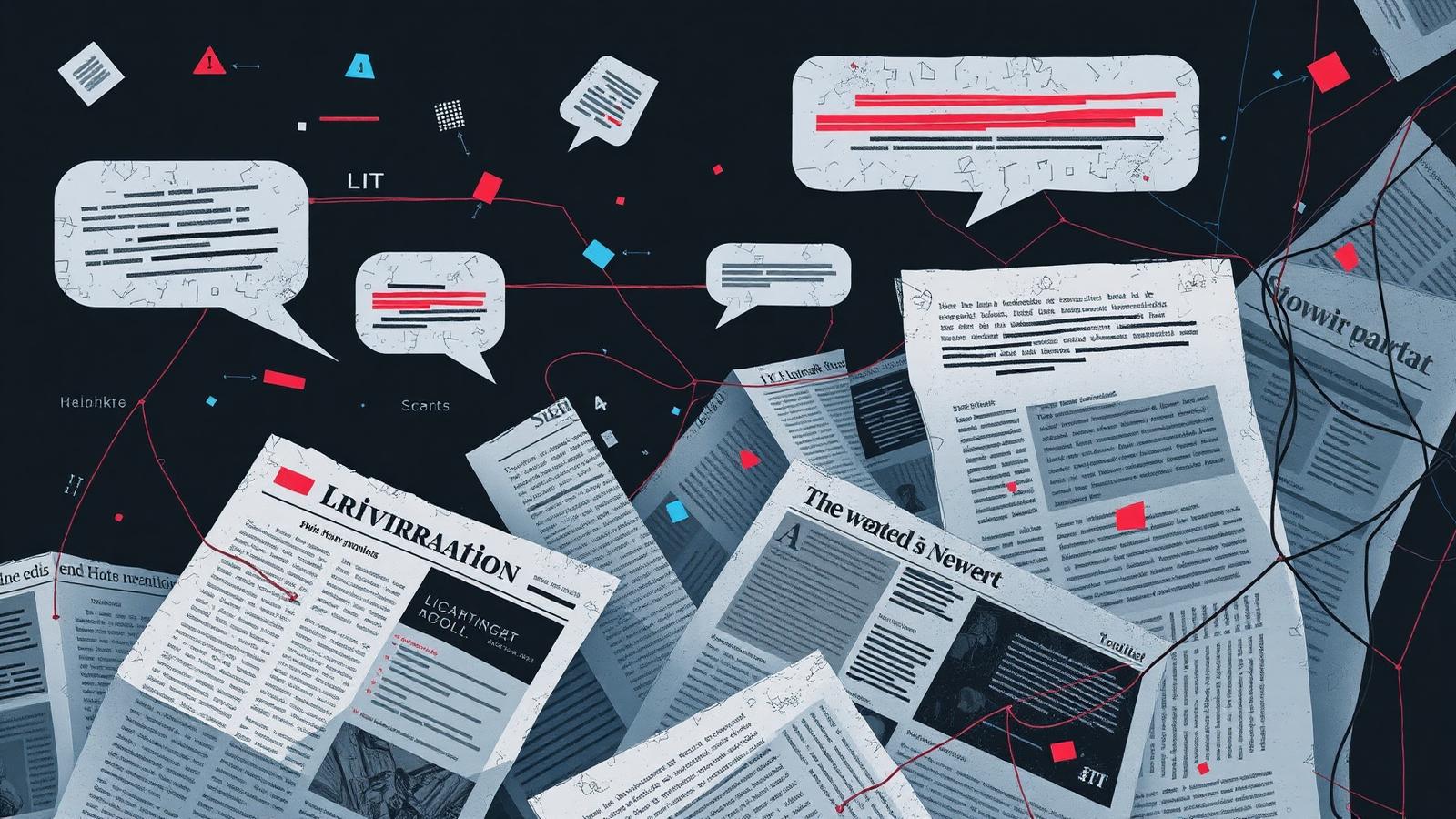
Misinformation spreads through predictable psychological, social, and technological patterns. It attaches itself to scientific institutions, complex systems, and high-velocity information environments — where uncertainty, novelty, and emotional resonance make people more vulnerable.
This challenge helps you understand how misinformation behaves and how your content responds when the machine applies dimensional, semantic, and temporal alignment.
What this challenge measures
- ›Veracity — does a claim survive independent checking?
- ›Source credibility — is the provenance trustworthy?
- ›Temporal integrity — does the statement remain true across time?
- ›Semantic drift — does meaning shift under pressure?
- ›Narrative scope — does the story collapse into oversimplification?
- ›Synthetic amplification — does the content show signs of artificial boosting?
Why misinformation is structurally predictable
- ›Novelty and surprise accelerate sharing
- ›Identity protection reinforces false narratives
- ›Social proof amplifies unverified claims
- ›Algorithms reward emotional content
- ›AI-generated media increases ambiguity
- ›Complex scientific systems invite misinterpretation
Why this challenge matters
Because misinformation is not random — it follows repeatable templates, exploits uncertainty, and thrives in high-velocity environments.
This challenge shows how your content behaves under those conditions.
How the machine evaluates your content
The engine uses metric rods — tiny, authoritative reference units — to measure:
Metric rods act like dimensional rulers: they give the machine a stable baseline so it can detect how your content shifts, drifts, aligns, or collapses.
Start the challenge
→ Explore drift, distortion, and alignment
→ See how your narrative holds up under stress