Story 3 of 5 · Permanent exhibition
The Screen and the Ink
A printed colour chart matches none of its 24 colours. The customer blames the print shop. The print shop blames the file. Who changed the colours?
- Question
- Observation
- Evidence
- Judgement
- Instrument Receipt
QuestionWho changed the colours?
Between the colour in a file and the colour you see lie many steps. Any one of them could be the culprit.
- The file
- The printer
- The paper
- The room light
- The camera
At the end of this story, you decide. Not the machine.
Observation24 colours – none matches.
In each patch: the colour from the file on top, the same colour as it arrives in the photograph of the printed chart below.
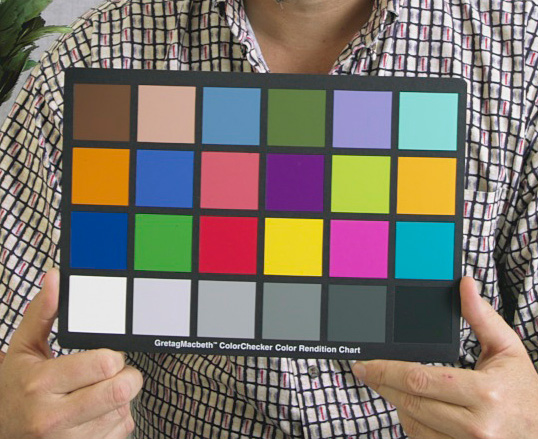
Measuring …
ΔE is the standard measure of colour difference: below 1 not visible, 1–2 only on a close look, 2–10 at a glance, above 10 a different colour.
What do you suspect?
EvidenceThe witness: the middle grey.
Make your guess above first – then the witness speaks.
JudgementYour judgement: who was it?
Instrument Receipt
Open the receipt: data, measurement and limits
- Digital colours
- Published values of the 24 ColorChecker colours (sRGB) ↗
- Photograph
- Richard F. Lyon, 2000 · Public domain · Wikimedia Commons ↗
- Measurement
- Each patch read from the photograph (median of a small square), compared with its digital value: CIEDE2000.
- Grey matching
- Linear colour channels scaled so that “Neutral 5” meets its digital value. Nothing else is changed.
- Result
- …
- Computed
- …
- What this receipt does not show
- Paper, printer, ink and lamp of this photograph were never recorded. The measurement therefore separates light and camera from the rest, but cannot single out printer and paper. The canonical captures with Digioptik Rathenow record every step.
- Repeat it yourself
- Colour calibration in the Demo Gallery