Lumo · Light
Brightness, contrast and light variation. Daylight curves and relative brightness ratios are candidates for comparison rules.
LCC Metric Framework
The Measurement Framework for Light, Time, and Colour.
LCC transforms light, temporal change, and colour into comparable dimensional evidence. This generates measurements that are digital, curved, and comparable across different contexts.
LCC investigates references, tolerances and scales for Light, Time and Colour: how do numerical descriptions become comparable? The proposed comparison geometry remains to be validated.
Measurement → Validation → Credibility → Trustworthiness
Distinct measurement categories, not competing roles. The chain describes prerequisites, not proof that AI is already trustworthy.
Next: DCOObservation → Measurement → Evidence → Findings → Shared findings → Framework
How Light, Time and Colour become comparable descriptions: DII describes observations; LCC investigates the spaces in which they can be compared, classified and validated.
Brightness, contrast and light variation. Daylight curves and relative brightness ratios are candidates for comparison rules.
State change, recurrence and trend between observations. Comparability requires a specified time basis, step size and, where relevant, cycle length.
Relationships between red, green and blue. A specified colour space and a justified distance rule make colour values comparable.
Central LCC hypothesis
This is the hypothesis to test, not an established result. Light, Colour and Time are proposed comparison and decision spaces, not additional metric families. Retina and Metal are intended validation domains for the same hypothesis; the current demonstrations do not yet test it.
Phenomena
Comparison Spaces
LCC Metric Framework · Light · Colour · Time — geometries of numerical comparison spaces
References
Tolerances
Boundary of roles: LCC defines comparability · DII supplies descriptions
Descriptions
DII projections: Chromatic (RGB) · Symmetrical (±x, ±y) · Dimensional (z)
Decisions
LCC evaluates descriptions against the previously defined references and tolerances.
Not merely: Phenomena → Measurements → Decisions. First we justify the space in which observations are comparable and the references and tolerances that apply. DII supplies descriptions; the decision follows from them. The Correspondence Hypothesis and validation then test the framework's adequacy.
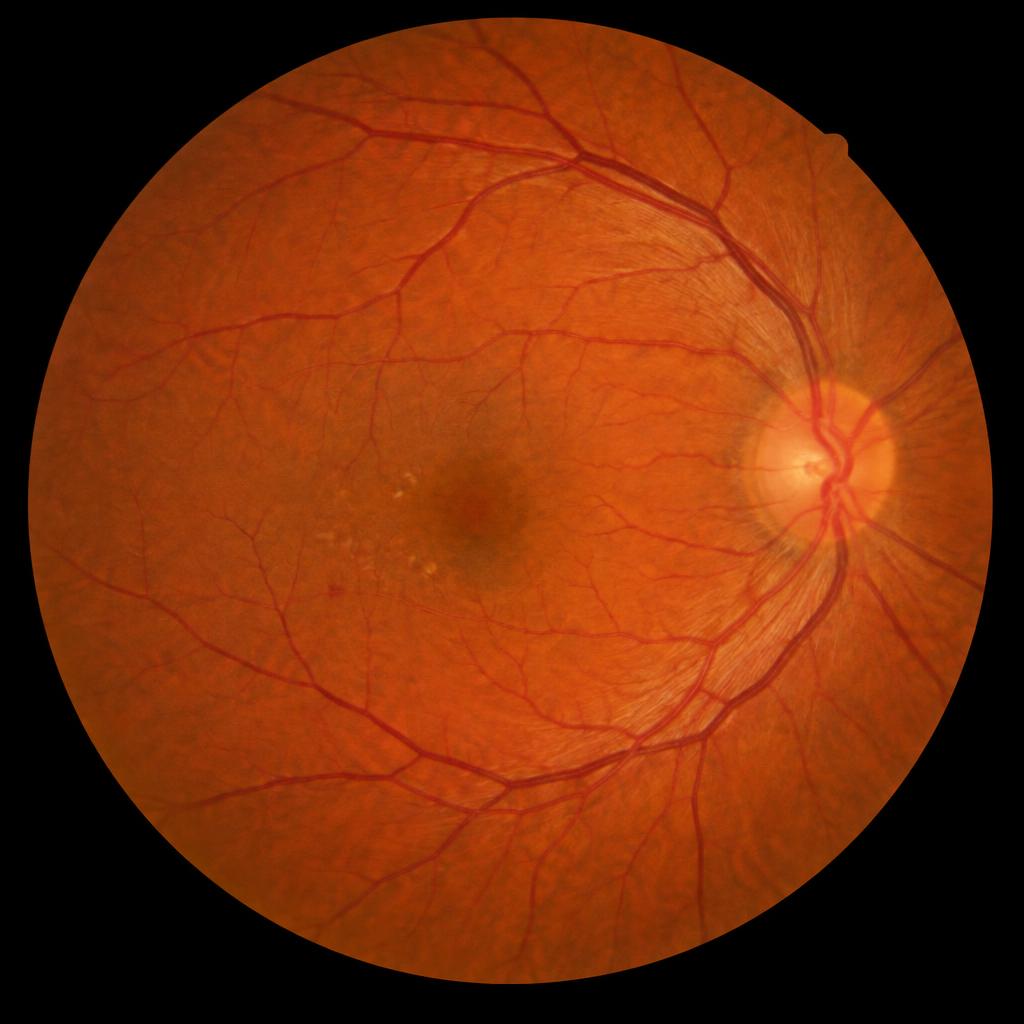
Both pilot processes run the same sequence and produce the same report with five metrics. All measures are computed from brightness; Colour and Time do not yet decide in the pilot.

The coin demonstration is a strong example of dimensional comparison but is not yet available on this site as a pilot process with a report. It will be added here once images and a report are available; until then it is not counted in the findings.
| Metric | Retina | Metal | Meaning |
|---|---|---|---|
| Area outside reference | 1.75% | 1.88% | Decides: share of image area beyond the local limit (mean + 3σ). Demonstration limit 2.5%. |
| Direction match | 94.3% | 99.4% | Supports: how closely the sample's direction profile follows the reference. |
| Direction continuity | 90.8% | 99.7% | Describes: how unbroken the structures run across the image. |
| Continuity difference | −0.1 | −0.1 | Supports: change in continuity relative to the reference. |
| Location of strongest deviation | Ring 5 · 2 o'clock | Ring 5 · 3 o'clock | Explains: where in the image the deviation sits — not a physical position measurement. |
The same description and comparison procedure produces identically structured reports for eye and metal. The comparison logic is therefore not tied to one image domain.
Both samples have nearly the same deviating area (1.75% vs 1.88%) but differ clearly in direction and continuity. Only a profile of several metrics describes the deviation.
Both lie below 2.5% — yet that limit is set, not justified. This is exactly where LCC comes in: what produces a tolerance that means the same in both domains?
Therefore: the framework proves useful because it produces traceable reports across domains and exposes that the decision hinges on an unjustified tolerance. Closing that gap is exactly the task LCC is proposed for — and it is testable.
Theoretical interpretation · Hypothesis
The 13 rungs can be understood not primarily as measurement quantities, but as increasingly complex comparison spaces. Each rung would make new relationships describable — enabling new kinds of references, tolerances and decisions.
This shifts the question from ‘What is measured?’ to ‘Which comparisons become possible?’. Mapping each individual rung to a geometry, comparison rule and justified tolerance remains an open task; the ladder alone does not establish those rules.
Description
Brightness and its variation across an observation or a daylight cycle.
Comparison framework · Candidate
Candidate: daylight curves and relative brightness ratios. Location, season and capture conditions must be specified; this does not yet define a universal LCC Light constant.
Description
Colour values and relationships between red, green and blue.
Comparison framework · Candidate
Candidate: RGB ratios in a specified colour space. Primaries, white point and encoding determine comparability; RGB alone does not define a perceptually meaningful distance rule.
Description
Change, recurrence and trend between observations.
Comparison framework · Candidate
Candidate: defined intervals, rates of change and cyclic relationships. Time basis, sampling and any cycle length must be specified; a trend is not a constant.
SI distinguishes base quantities such as length and time and defines units such as metre and second. LCC would take on a different task: describing relationships and distances within a specified comparison space. A unit alone defines neither similarity nor an acceptable deviation. SI-based methods can already use nonlinear comparison rules; LCC replaces neither units nor calibration.
Diagonals of dimensional shapes supply numerical ratios: a square with side length 1, for example, has a diagonal of length √2. Such root ratios are mathematically defined, not measured from an image. Whether they establish a suitable comparison space for Light, Colour or Time still requires an explicit mapping and validation.
A justified comparison basis in the defined space: a state, region or trajectory against which deviation is described.
An acceptable deviation region according to the geometry of this space. Its boundary needs domain justification; geometry alone does not determine what is acceptable.
A check of whether the described observation lies within this region. The comparison rule, reference and boundary remain traceable.
DII · Description layer, not comparison layer
The projections supply descriptions interpreted within the previously defined comparison space. They do not themselves determine what is equal, similar, different or acceptable. This does not establish their completeness.
A physical phenomenon appears as red, green and blue on a plane. The pilot immediately collapses RGB into brightness; the DII view additionally describes hue.
Brightness changes along the two axes. They produce descriptions of direction, strength and continuity.
z describes how x and y change together at the same location. It is a relational dimension, not physical height. Today it lives in the DII view, not the pilot.
Structure strength · Direction profile · Peak direction · Direction continuity · Hidden structure · Regularity · z-derived descriptions
Today the local mean + 3σ threshold is calculated from the sample–reference difference field. Deviating area is checked against a fixed 2.5% limit. Only this Light path currently leads to a pilot decision; the limit is not yet calibrated.
Chromatic calmness · Chromatic drift · partly Structural radiance
DII already describes colour. A colour reference, a tolerance geometry and a resulting decision are still absent from the pilot.
Changes across image series · Dimensional stability across observations
Temporal change exists as a description, but the pilot has no time reference, time tolerance or time-based decision yet.
This existing coverage is not evidence for the LCC Metric Framework. A curved comparison geometry has not yet been implemented or validated in the pilot.
Only once comparison space, reference and tolerance are defined does the question follow: Which digital description classes correspond to which physical qualities and can play the same role within the comparison space as established physical reference measures? Correspondence here means correlation or structural similarity, not direct conversion.
Two domains, the same LCC hypothesis: Does the geometry of numerical comparison spaces enable more traceable references, tolerances and decisions than a fixed linear comparison rule?
Not a claim of diagnosis, but testing deviation from a justified reference within the same comparison framework.
Not a claim of roughness measurement, but the same question about comparability, reference and acceptable deviation.
The comparison must use the same observations, expert-assessed reference cases and repeated captures. The test is which rule better distinguishes relevant differences and repeats decisions more reliably — not merely whether it produces different numbers.
View the Retina and Metal pilot reports